India's First Choice — Solario: Wind Turbine Manufacturer in India, Proven by Real Customer Reviews
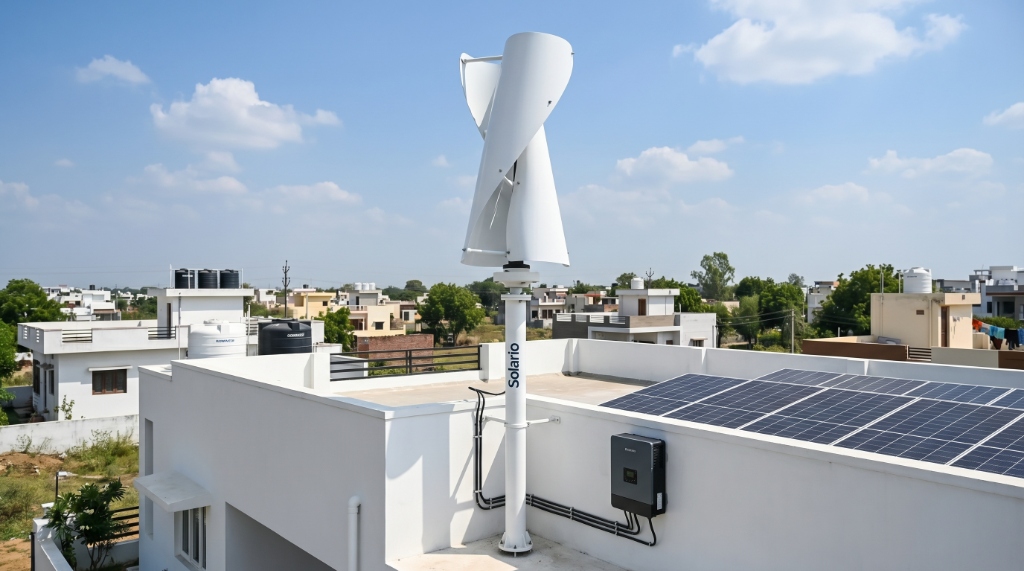
Anyone can publish an animation of a wind turbine. Very few companies go back to a customer's site months later, stand next to the owner and ask, on camera, "Did it actually solve your problem?"
That is what this page is about. Below you will find what Solario Technologies is as a wind turbine manufacturer, how to judge any wind turbine company in India, one commercial client review and a set of residential installations, each with its own video, what the site is, which Solario model is used where the source says so, and what the video does and does not prove. If you are deciding which wind turbine manufacturer to trust, this is the evidence we would want to see before buying.
Who Is the Best Wind Turbine Manufacturer in India? How to Judge a Wind Turbine Company
Short answer: There is no official government ranking of wind turbine manufacturers in India, so the best wind turbine manufacturer for you is the one that can prove its claims. Ask four questions: Do they manufacture in India themselves? Do they publish measured output, not just a rated number? Can they show real customer sites on video? Do they tell you honestly when wind will not work at your site? Solario Technologies answers all four openly, on this page.
Many sellers in India import turbines and resell them under their own label. A manufacturer is different: it controls the design, the generator, the controller and the testing, and it can supply spare parts for the life of the turbine. That is why the first question, before price, should always be: who actually builds this turbine, and where?
Solario Technologies: The Wind Turbine Manufacturer Behind These Reviews
| Fact | Detail |
|---|---|
| Company | Solario Technologies Private Limited |
| Founder and Director | Er. Harsh Chaudhary |
| Manufacturing location | Bulandshahr, Uttar Pradesh, India |
| Registered address | Old G.T. Road, opposite Atal Awasiya Vidyalaya, Bulandshahr, Uttar Pradesh 203001 |
| GSTIN | 09ABECS6836J1ZT |
| What it makes | Vertical axis wind turbines, horizontal axis wind turbines, hybrid solar-wind systems, Super MPPT Voltage Booster Controllers |
| Controller | Super MPPT Voltage Booster Controller, developed in-house, ships with every turbine |
| Testing | Every turbine is tested under load before dispatch, measuring volts and amperes into a connected battery bank |
| Spare parts | Blades, controllers and generators dispatched from the Bulandshahr facility |
| OEM | Available, under OEM and white-label arrangements |
| Installations | 500+ in India |
| Design lifespan | 20 years |
| Dealers named on our pages | Jodhpur (Rajasthan); Mumbai, Thane, Nashik and Beed (Maharashtra) |
Why testing under load matters: an unloaded turbine spins faster while producing nothing, so a video of a turbine simply spinning proves very little. Solario measures what the turbine actually delivers into a battery, and publishes those figures. You can see the factory and its testing in our article on how Solario builds wind turbines in Bulandshahr, and more about the company on our wind turbine manufacturer in India page.
Most Trusted Wind Turbine Manufacturer: What Trust Should Mean
Short answer: Trust in a wind turbine company comes from evidence a buyer can check: a real factory address and GST registration, measured output tables, on-site customer videos, honest limits, and spare parts after the sale.
Use this checklist with any wind turbine company in India:
- Real manufacturing address and GSTIN. Solario: Bulandshahr, Uttar Pradesh, GSTIN 09ABECS6836J1ZT.
- Measured output, not only a rated kW. Solario publishes a voltage and current table for each wind speed (see the 1kVA table below).
- Customer sites on video. This page shows a commercial client review and six home installation videos.
- Battery voltage stated clearly for every model. Solario lists 12V/24V and 48V models separately, because a mismatch is the most expensive mistake a buyer can make.
- Honest about low wind. Solario tells buyers to measure their wind before buying, and states that output depends on the site.
- Spare parts and support from the manufacturer. Blades, controllers and generators are dispatched from the factory.
- Live testing in public. The Solario 1kVA live test video, with a clamp meter on camera, has been watched more than seven lakh times on YouTube.
A company that cannot show these is asking you to trust a brochure. Solario asks you to trust what you can see.
Solario Wind Turbines at a Glance
| Item | Detail |
|---|---|
| Manufacturer | Solario Technologies Private Limited, Bulandshahr, Uttar Pradesh |
| Founder | Er. Harsh Chaudhary |
| Installations in India | 500+ |
| Models | 6 (1kW Horizontal, 1kVA Vertical, 1.5kVA Vertical, 2kW Horizontal, 2kW Vertical, 3kW Horizontal) |
| Price range | ₹57,000 + GST to ₹2,20,000 + GST |
| Generator | Maglev low-friction generator |
| Controller | Super MPPT Voltage Booster Controller included with every model |
| Battery systems | 12V/24V: 1kW-H, 1kVA-V, 1.5kVA-V, 2kW-H · 48V: 2kW-V, 3kW-H |
| Design lifespan | 20 years |
| Works at night? | Yes, whenever the wind is blowing, because it needs wind, not sunlight |
| Subsidy / net metering | No. It is an off-grid battery-charging product |
Commercial Client Review: Solar + Wind Hybrid at a Hospital Site
The site and the problem
This review was recorded at Narwar Hospital in Kakod, near Jewar in Uttar Pradesh. The hospital already had a large 25 kW solar power system. In daylight, solar was doing its job. The trouble started after sunset. As the customer explains in the video, the battery backup used to run out at around 12 midnight, leaving the rest of the night without stored power. For a hospital, the night is not a time when power can simply stop, and the electricity bill was the other reason the management wanted a better system.
What was installed
Instead of adding even more solar panels, which would still produce nothing at night, the site added a Solario 2 kW Vertical Wind Turbine to the same system. The turbine charges the same battery bank that the solar system charges, through its own controller, so the existing inverter and wiring stay as they were. The 2 kW Vertical runs on a 48V battery system, which suits a larger commercial setup like this one.
What the customer said
Er. Harsh Chaudhary went back to the site and stood next to the customer, with the turbine running behind them, and asked him directly what the problem was and how things are now. The customer's answer is simple: the night backup problem they faced before has improved since the wind turbine was installed, and the system is working well for them. This is not a script and not an actor. It is the customer's own account, at his own site, in front of his own turbine.
What this review proves, and what it does not
This review proves three things: the turbine is real and installed at a working hospital, it is connected into a large solar system, and the customer is satisfied with how it changed his night backup. What the short video does not include is metered data: there are no kWh logs, no night wind-speed records and no before-and-after electricity bills. So read it as an honest customer experience, not as a laboratory measurement. The amount of power any wind turbine adds at night depends on how much wind blows at that site after sunset.
Why solar + wind works better at night
Solar panels stop generating at sunset, every single day. Wind does not follow the sun. On many nights the wind keeps moving, and in monsoon and winter fog, when solar output falls sharply, wind often continues. When both sources charge the same battery, the battery starts the night fuller and is topped up while the wind blows, so it is drained less deeply. That is the whole idea behind a solar-wind hybrid system, and it is exactly the gap this hospital wanted to close.
Model used at this site: Solario 2kW Vertical Wind Turbine: ₹2,20,000 + GST, 48V battery system, Super MPPT controller included.
Residential Client Reviews and Home Installations
Commercial sites are one part of the story. Most Solario wind turbines go on Indian homes: rooftops, terraces and farmhouses. These videos show real Solario home installations across India. Each one is described exactly as its source blog or video describes it, with no invented details.
1. Real Homes Across India, One Clip per Installation
This short video is a fast tour through real Solario installations on Indian homes. Each clip is a different house: rooftops, terraces and farmhouses with a turbine mounted on a short pole and spinning in actual wind. It is the same footage we use on our real wind turbine installations page, which documents 12 sites with photos and video. The point of this video is simple. A brochure can show a render; this shows working turbines on ordinary Indian roofs, the kind of buildings most of our customers live in. If you are wondering what a home wind turbine actually looks like once installed, how high the pole is above the parapet, and how much roof space it takes, this is the quickest answer. The homes in these clips checked their site wind with an anemometer before choosing a model, which is the first step we recommend to every buyer.
2. Gujarat Rooftop with a Live Wind-Speed Reading
This installation is on a residential rooftop in an urban part of Gujarat. The Solario vertical axis wind turbine is mounted on a raised mast that lifts it 3 to 4 metres above the roofline, clear of the surrounding houses, water tanks and stair rooms. That height is the reason this site works well: wind just above a roof is turbulent and slow, while a few metres higher it is cleaner and faster. In the video, a handheld anemometer at the site reads 7.8 m/s at a temperature of 40.3°C, which shows that Gujarat's heat does not stop the wind. For comparison, our published measurements for the 1kVA Vertical show about 28 volts and 10.36 amperes at 8 m/s. That figure is from our measured performance table, not a meter reading in this video, but it gives a fair idea of what a reading close to 8 m/s means for a home battery. Gujarat has strong wind potential, and you can read more about models, prices and sites in the state on our Gujarat wind turbine page.
3. Rajasthan Installation: Built for Open Terrain, Dust and Heat
Rajasthan is one of the best regions in India for home and farm wind turbines. The same open land that makes the state a solar leader also gives wind a clear path with few obstructions, and unlike solar, that wind keeps working after sunset. This video shows a Solario wind turbine installed in Rajasthan. Solario turbines are installed across the state, including Jaipur, Jodhpur and Jaisalmer, as well as Bikaner, Barmer, Ajmer, Udaipur and Kota, and Solario has a dealer in Jodhpur. The model choice in Rajasthan follows the site: on open land in the western districts, a horizontal turbine gives the most output per rupee, while on city rooftops in Jaipur, Jodhpur or Udaipur the compact 1kVA Vertical fits a roof corner at 3.5 feet tall. Rajasthan also asks more of a turbine: dust and heat mean blades should be cleaned periodically, mounting bolts checked after dust storms, and blade edges inspected during routine maintenance. Full details are on our Rajasthan wind turbine page.
4. Maharashtra: Rooftop, Solar Hybrid and Two-Turbine Sites
This video packs several different kinds of Solario sites into one short clip, which makes it useful for anyone trying to picture their own setup. First, an urban rooftop: a turbine on a tiled terrace with multi-storey buildings all around, proof that a vertical turbine can work in a built-up area when it is mounted high enough. Second, a hybrid site: a vertical turbine on a tall mast above a full rooftop solar array, the same solar-plus-wind idea as the hospital above, on a home scale. Third, a horizontal turbine on an open site, shown running in the rain, which is exactly the weather that stops solar. Fourth, a rooftop with two vertical turbines side by side, wired together to one battery bank. The video ends with rotors being tested at our manufacturing facility in Uttar Pradesh before dispatch. Solario has dealers in Mumbai, Thane, Nashik and Beed. See our Maharashtra wind turbine page for more.
5. Full Home Wind Turbine Review: Price, Installation and Testing
This is the long-form review for anyone who wants the complete picture in one sitting. Er. Harsh Chaudhary explains how to choose between a vertical and a horizontal wind turbine for home, shows a live test with real volts and amperes on camera, walks through low-wind performance, covers the price of each model and explains the battery setup during installation. The most important lesson in this video is the battery voltage rule: a turbine must match your battery bank. The 1kW Horizontal, 1kVA Vertical, 1.5kVA Vertical and 2kW Horizontal work with 12V or 24V systems, while the 2kW Vertical and 3kW Horizontal need a 48V system. Connecting the wrong turbine to the wrong battery is the most common and most expensive mistake buyers make. The review also explains why a turbine and a solar panel do the same job in the end: both charge your battery, and your existing inverter runs the house from that battery.
6. Live Rooftop Test of the 1kVA Vertical with a Clamp Meter
A review is only as good as its numbers, so this video puts a clamp meter on the Solario 1kVA Vertical Wind Turbine, mounted on a rooftop, and shows the current on camera in light wind. It also shows the turbine's three-phase output going into the controller, how the controller charges the battery, and how the battery runs the inverter you already have. Our measured figures for the 1kVA Vertical, taken at the turbine's DC output, are below. Start-up speed (1.5 m/s) is when the rotor begins to turn; useful charging begins as wind rises above that.
| Wind speed | Voltage | Current |
|---|---|---|
| 6 m/s | 26 V | 4.23 A |
| 8 m/s | 28 V | 10.36 A |
| 10 m/s | 29 V | 22.07 A |
| 13 m/s (rated) | 29 V | 27.56 A |
What These Reviews Have in Common
Across the hospital and the homes, the same pattern appears. Every successful site has three things in place: enough wind at the mounting height, a turbine matched to the battery voltage, and a pole high enough to clear the roof's turbulence. None of these customers replaced their inverter or rewired their building. The turbine simply became a second charger for the battery they already had, working at night and in bad weather when solar cannot. That is why Solario publishes real sites instead of promises: what matters is how a turbine behaves on an actual roof, in actual wind.
Which Solario Wind Turbine Is Right for You?
Short answer: For a typical city rooftop with a 12V or 24V battery, start with the 1kVA Vertical. For open land with steady wind, a horizontal model gives more output per rupee. For a larger 48V system, such as a commercial site, choose the 2kW Vertical or the 3kW Horizontal.
| Model | Type | Battery system | Best for | Price |
|---|---|---|---|---|
| 1kW Horizontal | Horizontal | 12V / 24V | Open land, steady wind, lowest entry price | ₹57,000 + GST |
| 1kVA Vertical | Vertical | 12V / 24V | Typical home rooftop; 3.5 ft tall | ₹89,000 + GST |
| 1.5kVA Vertical | Vertical | 12V / 24V | Rooftops needing more output than the 1kVA | ₹1,29,000 + GST |
| 2kW Horizontal | Horizontal | 12V / 24V | Open or exposed sites | ₹1,25,000 + GST |
| 2kW Vertical | Vertical | 48V | Larger homes and commercial sites (model used at the hospital) | ₹2,20,000 + GST |
| 3kW Horizontal | Horizontal | 48V | Open land, farms, highest output | ₹1,65,000 + GST |
For a deeper comparison, read our best wind turbine for home in India guide.
Before You Buy: Check Wind, Height and Battery
Short answer: Measure your wind, mount high, and match the battery voltage. These three checks decide whether any wind turbine will satisfy you.
- Measure your wind first. Buy a handheld anemometer and take readings at the height where the turbine will sit, at different times of day, including evening. Vertical turbines suit sites averaging roughly 3.5 to 5.5 m/s; horizontal turbines suit stronger, steadier wind.
- Height beats size. Wind power rises with the cube of wind speed, so a small increase in wind gives a big increase in power. Mounting the turbine above water tanks, stair rooms and parapet walls matters more than buying a bigger turbine and mounting it low.
- Match the battery voltage. 12V/24V systems: 1kW Horizontal, 1kVA Vertical, 1.5kVA Vertical, 2kW Horizontal. 48V systems: 2kW Vertical, 3kW Horizontal.
- Keep your inverter. The turbine charges the battery through the Super MPPT controller; your existing inverter keeps running the load. Lead-acid, tubular and lithium batteries can all be used.
- Know it is off-grid. A home wind turbine is a battery-charging system. There is no net metering and no government subsidy for it.
What Is Included and How Installation Works
The listed price covers the wind turbine and its Super MPPT Voltage Booster Controller. Batteries, inverter, the mounting pole or structure, cabling, transport and local installation are arranged separately, usually by a local electrician or a Solario dealer. A typical installation follows four steps: confirm the wind at the mounting height, fix a strong pole on an RCC roof or on open ground so the turbine clears nearby obstructions, connect the turbine to the controller, and connect the controller to the battery bank. If you already have solar, your battery and inverter are already in place, which makes adding wind simple.
Maintenance and Lifespan
Solario wind turbines are designed for a 20-year lifespan. Maintenance is light: clean the blades from time to time, check the mounting bolts after storms, and in dusty regions such as Rajasthan inspect the blades more often. The controller protects the battery, and a well-mounted turbine needs no daily attention.
Honest Limits You Should Know
A wind turbine is not magic, and we would rather you buy with the right expectations. Output depends completely on the wind at your site: in low wind, output is low. The start-up speed only tells you when the rotor begins to turn, not how much charging you will get. Customer reviews show real experiences at real sites, but they are not laboratory certificates, and your site will differ from theirs. That is exactly why we ask every buyer to measure their wind before choosing a model.
Frequently Asked Questions
Who is the best wind turbine manufacturer in India? There is no official ranking, so judge manufacturers by proof. Solario Technologies, a wind turbine manufacturer in Bulandshahr, Uttar Pradesh, builds vertical and horizontal wind turbines from 1kW to 3kW, has 500+ installations in India, publishes measured output and shows real customer sites on video.
Which is the best wind turbine company in India for homes? Choose a company that manufactures its own turbines, matches the model to your battery voltage and shows real home installations. Solario Technologies offers six models for homes and businesses, from ₹57,000 + GST, each with an in-house Super MPPT controller.
Which is the most trusted wind turbine manufacturer in India? Trust comes from what you can check: a real factory, GST registration, measured output tables and customer videos. Solario Technologies publishes all of these, including an on-site commercial client review and home installation videos from several states.
Is Solario Technologies a wind turbine manufacturer or a trader? A manufacturer. Solario Technologies Private Limited designs and builds its wind turbines in Bulandshahr, Uttar Pradesh, develops its own controller, tests each turbine under load before dispatch and also manufactures for partner brands under OEM arrangements.
Are Solario wind turbines made in India? Yes. Solario wind turbines are manufactured in Bulandshahr, Uttar Pradesh, India.
Are these real Solario customer installations? Yes. Every video on this page is filmed at an actual site: a hospital in Uttar Pradesh and home installations in states including Gujarat, Rajasthan and Maharashtra. Solario has 500+ installations in India.
Does a wind turbine work at night? Yes, whenever the wind is blowing. A wind turbine needs wind, not sunlight, so it can keep charging your battery after sunset, which solar panels cannot do.
Is a wind turbine worth adding if I already have solar? If your site has enough wind, yes. Solar stops at sunset and drops in monsoon and fog; wind can continue at those times. Both charge the same battery, so your night backup can last longer, as the hospital customer on this page describes.
Which Solario model should I buy for a 12V or 24V battery? The 1kW Horizontal, 1kVA Vertical, 1.5kVA Vertical or 2kW Horizontal. For a 48V battery system, choose the 2kW Vertical or the 3kW Horizontal.
What wind speed do I need? The 1kVA Vertical's rotor starts turning at 1.5 m/s, but useful charging needs more wind; vertical turbines suit sites averaging roughly 3.5 to 5.5 m/s. Measure your site with an anemometer before buying.
How much does a Solario wind turbine cost? From ₹57,000 + GST for the 1kW Horizontal to ₹2,20,000 + GST for the 2kW Vertical. The price includes the Super MPPT controller.
Will it work with my existing inverter? Yes. The turbine charges the battery through its controller, and your existing inverter runs your load from that battery. No house rewiring is needed.
Is a home wind turbine noisy? The 1kVA Vertical has no perceptible noise in normal operation, which is one reason vertical turbines are popular on city rooftops.
Is there a government subsidy for a home wind turbine? No. A home wind turbine is an off-grid battery-charging product, so there is no subsidy and no net metering.
How long does a Solario wind turbine last? Solario wind turbines are designed for a 20-year lifespan with simple maintenance: blade cleaning and bolt checks after storms.
The best proof of a wind turbine manufacturer is not a specification sheet; it is a customer standing next to its turbine and telling you what changed. Watch the reviews, measure your wind, match your battery, and then choose your model. If you want help picking the right Solario wind turbine for your roof, use the enquiry button below.