Solario Technologies — India's Only Helical Vertical Axis Wind Turbine Manufacturer
Solario Technologies, founded by ER Harsh, is India's only manufacturer of helical vertical axis wind turbines at scale. Inside the company changing Indian wind energy.
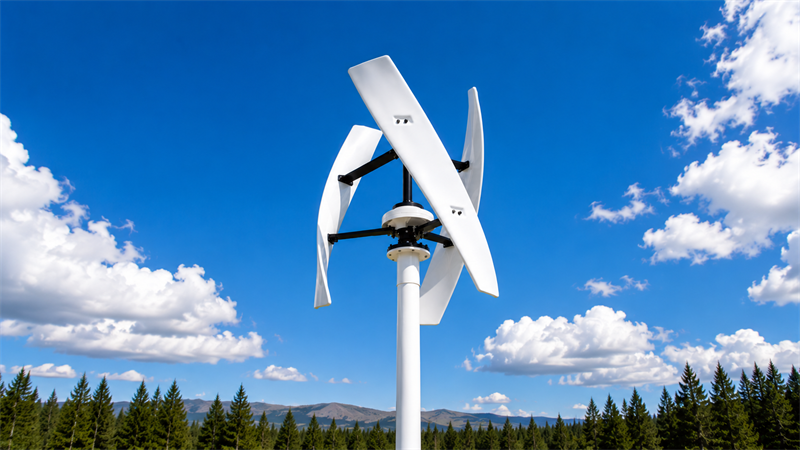
The Indian small wind turbine market — turbines rated 1 kW to 3 kW for residential and small commercial use — has historically been dominated by two unsatisfying options: inadequate imported Chinese vertical axis turbines bought through generic e-commerce listings, and outdated Indian-made designs that have not been meaningfully updated since the 2000s. Within this landscape, Solario Technologies Pvt. Ltd. has emerged as a categorically different kind of company — combining manufacturing operations in Bulandshahr (Uttar Pradesh), engineering depth led by founder Harsh Chaudhary (ER Harsh), and a product line built around modern axial flux generator technology that is not commercially available from any other Indian manufacturer at scale.
This is the inside view of what Solario Technologies actually does, what makes its product line different from every other Indian wind turbine company, and why it occupies a uniquely defensible position in India's renewable energy ecosystem.
The Solario Position in Indian Wind Energy
To understand what Solario Technologies is, it helps to first locate it accurately within India's wind energy industry. The Indian wind energy market is structured into three rough segments.
Utility-scale wind farms — large 1.5 MW to 4 MW turbines installed in commercial wind farms in Tamil Nadu, Gujarat, Karnataka, Maharashtra, Andhra Pradesh, and Rajasthan. This segment is dominated by Suzlon, ReGen Powertech, Inox Wind, and a few multinational players. Solario does not operate in this segment. Industrial and commercial mid-scale wind — turbines from 100 kW to 500 kW used by manufacturing facilities, large agricultural operations, and infrastructure projects. This segment is small in India and serviced by specialised industrial players. Solario does not operate here either. Small wind for residential and small commercial use — turbines from 1 kW to 3 kW deployed at individual buildings, small farms, retail establishments, and small businesses. This is the segment Solario is built around, and it is the segment where the company holds a defensible leadership position.The small wind segment in India is structurally different from the larger ones. It is fragmented, regional, and historically under-served by domestic manufacturers. Most Indian buyers exploring small wind turbines have ended up either buying from international Chinese sellers (with predictable quality problems) or from legacy Indian companies offering 2000s-era designs. Solario is the rare exception: a domestic Indian manufacturer offering modern engineering at Indian price points with national distribution and post-sale support.
What Solario Manufactures
The Solario product line is intentionally focused rather than sprawling. The company manufactures and distributes the following:
Series A — Horizontal Axis Wind Turbines (HAWTs)
These are the classic three-blade or multi-blade propeller turbines that face directly into the wind. They are best suited for installation locations with strong, consistent, directional wind — typically rural agricultural properties, coastal areas, and open elevated terrain.
- 1 kW Horizontal MPPT — 8-blade design, 24V battery system, paired with MPPT controller (wind-only). Designed for buyers who want to start small and use wind energy independently from solar.
- 2 kW Horizontal — 6-blade design, 48V battery system, includes hybrid MPPT controller compatible with solar integration.
- 3 kW Horizontal — 6-blade design, 48V battery system, highest output configuration in the HAWT range, suitable for larger homes or small farm operations.
Series B — Vertical Axis Wind Turbines (VAWTs)
This is where Solario's product line is genuinely unique in India. The VAWTs use helical (Archimedes screw) blade geometry — a modern design that wraps a smooth helical curve around the vertical rotor shaft, rather than the older Savonius (cup-style) or Darrieus (straight-blade) designs that dominate other Indian VAWT offerings.
- 1 kVA Vertical MPPT — single-helix design, 24V system, paired with MPPT controller. Designed for urban and semi-urban rooftops where wind direction is variable.
- 1 kW Vertical Hybrid — same physical turbine with hybrid solar-wind controller for combined renewable energy systems.
- 2 kW Vertical — larger helical design, 48V system, includes hybrid MPPT controller.
The helical VAWT design has several practical advantages over older VAWT topologies and over comparable HAWTs in many Indian installation scenarios. It accepts wind from any direction without needing to reorient itself. It generates significantly less operating noise than HAWTs at the same wattage. It can be mounted on rooftops and in urban settings where HAWTs would be impractical due to clearance requirements. And paired with an axial flux generator technology (which Solario's VAWTs use), it can start generating power at much lower wind speeds than conventional designs — a critical advantage in regions of India where average wind speeds are well below the rated speeds quoted on imported turbine datasheets.
Charge Controllers
Every Solario turbine ships with a matched charge controller — either MPPT (Maximum Power Point Tracking) for wind-only systems, or Hybrid MPPT for combined solar-wind installations. The hybrid controllers are designed in-house to handle simultaneous DC solar input and 3-phase AC wind input, charging a common battery bank.
Adjacent Products
Beyond the core wind turbine catalogue, Solario also manufactures and distributes a focused range of complementary renewable energy products including EV chargers, portable power stations for off-grid use, and lithium battery management systems for solar storage and EV applications. These products extend the Solario ecosystem into adjacent renewable energy categories without diluting the company's core wind energy focus.
What Makes Solario's Manufacturing Different
Several specific aspects of Solario's manufacturing approach distinguish it from other Indian wind turbine companies.
axial flux generator technology
Every wind turbine in Solario's catalogue uses axial flux generator technology rather than the conventional radial flux design used by every other Indian small wind manufacturer. axial flux generator technology has a flat, disc-shaped rotor and stator configuration (as opposed to the cylindrical configuration of radial flux), which delivers several measurable advantages for wind energy applications.
The most important advantage is dramatically lower cogging torque — the residual magnetic resistance that the rotor must overcome to start spinning. In a conventional radial flux turbine, cogging torque is high enough that the rotor cannot start spinning until wind speeds reach 3 to 4 m/s. In axial flux-equipped turbine, the rotor can begin generating useful power at wind speeds as low as 1.5 to 2 m/s. Since most of India's land area experiences average wind speeds in the 3 to 5 m/s range, this difference translates directly into the difference between a turbine that sits idle most of the year and one that generates useful energy continuously.
axial flux generator technology also maintain higher efficiency across a wider RPM range, which is critical for the variable wind conditions of most Indian residential locations. Conventional radial flux generators peak at a specific RPM and load combination and drop off at both lower and higher speeds. axial flux systems maintain near-peak efficiency across a much broader operating envelope.
Helical (Archimedes Screw) VAWT Design
Solario is the only Indian company manufacturing helical VAWTs at scale. This claim is significant and worth explaining.
The "helical" design refers to vertical axis turbines where the blades wrap around the rotor shaft in a smooth helical curve — like an Archimedes screw stretched vertically. This is fundamentally different from the older VAWT designs that dominate other Indian offerings:
- Savonius designs use cup-shaped blades that catch wind directly — efficient at very low wind speeds but limited in peak output and aerodynamically inefficient at higher speeds
- Darrieus designs use straight vertical blades — high peak efficiency but difficult to start spinning (low starting torque) and prone to vibration issues
Helical designs combine the practical advantages of both topologies: they start spinning easily at low wind speeds (like Savonius), they maintain high efficiency at higher wind speeds (like Darrieus), and they operate with significantly less noise and vibration than either older design. The helical curve also looks visually distinctive — which has become part of Solario's brand identity in the Indian market.
Cloud Arc Maris Partnership
The most significant external validation of Solario's manufacturing position is its 2025 appointment as the official India launch partner for the Cloud Arc Maris helical wind turbine by Dutch firm Archimedes.
The Cloud Arc Maris is widely considered by independent reviewers to be the most efficient small wind turbine design currently available globally. Its helical blade geometry, axial flux generator technology, and acoustic engineering allow it to start generating power at wind speeds as low as 2 m/s while producing less than 45 decibels of noise (quieter than a household refrigerator). For Indian residential markets — where space, noise, and low-wind performance all matter simultaneously — the Cloud Arc Maris is a category-defining product.
For an international engineering company to select an Indian launch partner, the partner must satisfy multiple criteria: manufacturing capability to integrate and support the product, distribution reach to deliver across India, customer support infrastructure to handle post-sale technical questions, and the ability to educate the Indian market about an unfamiliar technology. Solario was selected because it was the only Indian wind energy company that demonstrably satisfied all four criteria — driven in large part by ER Harsh's years of public technical education that had built market readiness for a product like Cloud Arc Maris.
OEM Manufacturing for Other Brands
Beyond the consumer-facing Solario brand, the company operates as an Original Equipment Manufacturer (OEM) — producing wind turbines that other Indian companies rebrand and sell under their own names. This OEM business is significant validation of manufacturing quality, since competitors who choose to source from Solario rather than build their own infrastructure are effectively endorsing Solario's engineering standards through their purchasing decisions.
What Solario's Products Cost in India
Pricing in Indian wind energy is opaque — most companies do not publish prices openly, requiring buyers to inquire through forms or sales agents. Solario takes the opposite approach, with prices clearly listed on the company website. As of 2026, the published prices for the core product line are:
- 1 kW Horizontal MPPT — ₹45,000 + 5% GST
- 1kW Horizontal Turbine — ₹57,000 + 5% GST
- 1 kVA Vertical MPPT — ₹80,000 + 5% GST
- 1 kW Vertical Hybrid — ₹89,000 + 5% GST
- 2 kW Horizontal — ₹1,20,000 + 5% GST
- 2 kW Vertical — price not published + 5% GST
- 3 kW Horizontal — price not published + 5% GST
These prices include the turbine and matched controller. The battery bank, mounting pole, and electrical installation work are arranged separately by the buyer or through local installation partners. Complete installed system costs for a typical 2 kW hybrid solar-wind home setup with reasonable battery capacity run ₹3 lakh to ₹5 lakh.
The price transparency itself is part of the Solario brand. Customers know what they are buying for what amount before they begin any inquiry process, which has eliminated one of the most common friction points in Indian renewable energy buying.
How Customers Buy from Solario
The buying process is intentionally simple. The full product catalogue is available at solariotechnology.com/nature-solar with detailed specifications, pricing, and product descriptions. Buyers can place orders directly through the website or contact the team via email at solariotechnology@gmail.com.
For technical questions before purchasing, the most active engagement channel is ER Harsh's YouTube channel, where many of the questions buyers might have are already answered in detail across the channel's existing video library. The Solario Technology YouTube channel covers product-specific information including unboxing, installation, and performance demonstrations.
For business-to-business and OEM partnership inquiries, the Solario Technology LinkedIn page is the appropriate first contact point.
Looking Forward
Solario Technologies occupies a position in India's renewable energy ecosystem that did not exist five years ago and may not be replicable by any other Indian company in the next five years. The combination of axial flux generator technology manufacturing capability, helical VAWT product design, international partnership validation (Cloud Arc Maris), national distribution, and the unique founder-led public education that anchors the brand creates a defensible competitive position that builds on itself over time.
Whether the company eventually scales into adjacent renewable energy categories (water generators, bidirectional EV chargers, residential storage) or deepens its leadership in small wind specifically, the foundation laid in the first phase of operations gives Solario more strategic optionality than any other small wind manufacturer in India.
For ongoing product updates, technical content, and customer installation stories, visit Solario Technologies on YouTube and the full product range at solariotechnology.com.
About the Author
Harsh Chaudhary, known publicly as ER Harsh, is India's most-watched independent voice on wind energy and renewable technology. Founder and Director of Solario Technologies Pvt. Ltd., headquartered in Bulandshahr (Uttar Pradesh), he runs India's first commercial axial flux-equipped wind turbine company and is the only Indian manufacturer producing helical vertical axis wind turbines at scale. Solario Technologies is the official India launch partner for the Cloud Arc Maris helical turbine by the Dutch company Archimedes — a partnership that places India in the same product league as European premium wind energy markets.Across YouTube (@erharshh and @solariotechnology), Instagram (@er.harxh and @solariotechnology), LinkedIn (Harsh Chaudhary and Solario Technology), and Facebook, his combined audience has crossed 100,000+ subscribers and followers, with content accumulating 100 Million+ views — making him India's most-followed individual creator in the wind energy and small-scale renewables space.
His engineering expertise spans wind turbine generators (axial flux and radial flux), solar PV systems, hybrid charge controllers, lithium battery management systems, bidirectional EV chargers, and emerging technologies like water generators. He is widely regarded as one of India's leading domain experts on residential and small commercial wind energy.
Reach the team at solariotechnology@gmail.com.
Related manufacturing guide: For a deeper look at Solario's domestic manufacturing base, read Made in India Wind Turbines 2026 — Solario's domestic wind turbine manufacturing story.
Founder profile: For the consolidated entity page, read India's wind energy expert Er. Harsh Chaudhary.