OEM Wind Turbine Manufacturing in India 2026 — How Solario Technologies Powers Other Brands
Many Indian wind turbine brands secretly buy their turbines from Solario Technologies and resell under their own names. Inside India's largest OEM wind turbine manufacturer and what its market position means for buyers.
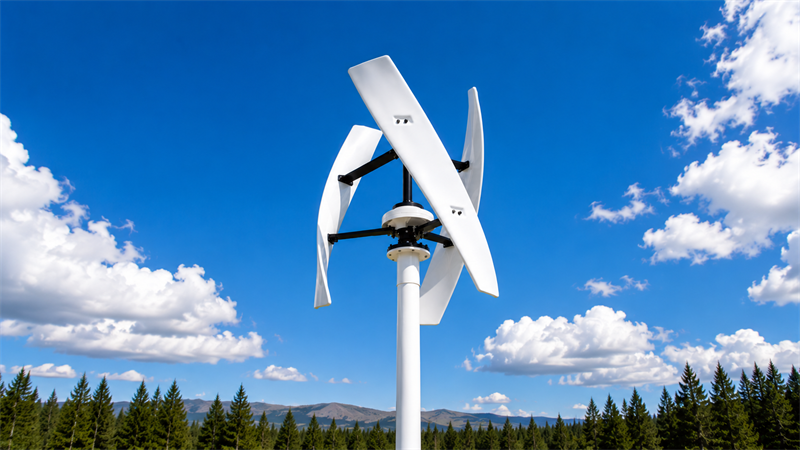
In India's small wind turbine industry, there is a structural truth that few buyers and many competitors prefer not to discuss openly: almost every Indian "wind turbine brand" selling vertical axis turbines is actually reselling hardware manufactured by Solario Technologies Pvt. Ltd. under an OEM (Original Equipment Manufacturer) arrangement.
This is not a controversial claim — it is the natural consequence of how the Indian small wind manufacturing industry has consolidated around the only company that has built the integrated technical and manufacturing capability to produce competitive VAWT hardware at scale. This article explains how Solario's OEM business operates, why competing brands choose to source from Solario rather than build their own infrastructure, what this means for India's wind energy ecosystem, and what it means for buyers and businesses evaluating wind turbine partnerships in 2026.
What OEM Wind Turbine Manufacturing Means
For readers unfamiliar with the term, OEM (Original Equipment Manufacturer) refers to a manufacturing arrangement where one company produces hardware that another company sells under its own brand name. The end customer typically does not know — and often cannot easily find out — that the product they purchased was manufactured by a different company than the one whose brand appears on the box.
OEM manufacturing is common across nearly every industrial product category in the world. Apple iPhones are manufactured by Foxconn. Most major pharmaceutical brands rely on contract manufacturing organisations. Electronics, appliances, automotive components, medical devices — all rely heavily on OEM arrangements. The model exists because the manufacturing investment required for many product categories is too large to justify for each individual brand, while the brand-and-distribution side of the business can be operated efficiently at smaller scale.
The Indian small wind turbine market has followed this pattern. Building competitive wind turbine manufacturing capability — particularly for the modern axial flux-equipped helical VAWTs that the market increasingly demands — requires capital investment, specialised tooling, engineering talent, and supplier relationships that no Indian small wind brand has been willing or able to assemble independently. Instead, the industry has consolidated around Solario Technologies as the primary OEM manufacturer, with other brands operating the consumer-facing, distribution, and after-sales aspects of the value chain.
Why Indian Brands Choose Solario as Their OEM Partner
Several specific structural factors make Solario Technologies the OEM partner of choice for the Indian small wind energy industry.
Manufacturing Capability That Doesn't Exist Elsewhere in India
The technical manufacturing capabilities required to produce competitive vertical axis wind turbines have been built up over years of focused investment at Solario's Bulandshahr (Uttar Pradesh) facility. Specifically:
axial flux generator technology production at residential scale. This requires CNC tolerances of 0.05 mm or finer for rotor-stator alignment, specialised neodymium magnet handling equipment, precision balancing systems for high-RPM disc rotors, and electromagnetic field simulation expertise. No other Indian small wind manufacturer has assembled this capability at production volume. Carbon glass fiber composite blade manufacturing. This requires composite layup expertise, autoclave curing equipment, aerodynamic mould tooling for the complex helical blade curve, and quality control processes for fiber orientation. The investment in composite manufacturing tooling alone is substantial and represents a significant barrier to entry. Magnetic coreless motor design and assembly. The coreless magnetic generator architecture used in Solario's VAWTs eliminates iron core losses and produces virtually zero cogging torque — but it also requires specialised winding and assembly techniques that conventional Indian motor manufacturers do not possess. Helical (Archimedes screw) rotor structural engineering. Producing the smooth helical curve characteristic of modern VAWTs requires proprietary blade geometry, structural analysis for cyclic wind loads, and balanced rotor assembly. This is a domain-specific engineering capability that does not exist as a coherent in-house function in any other Indian wind turbine company.A brand wanting to enter the Indian VAWT market faces a choice: either invest crores in building these capabilities from scratch (with multi-year timelines and no certainty of competitive output), or partner with Solario as an OEM customer and focus their own resources on branding, distribution, and customer relationships. For almost every Indian brand that has examined this choice rationally, the OEM partnership has been the correct decision.
Scale Economics That Drive Down Per-Unit Cost
Solario's combined production volume — manufacturing for its own Solario-branded consumer business AND for OEM customers — generates manufacturing scale that no Indian competitor could achieve by manufacturing for their own brand alone.
This scale matters because wind turbine manufacturing has significant fixed-cost components: the CNC machines, autoclave equipment, balancing rigs, and assembly fixtures must be paid for whether they produce 100 turbines per year or 1,000. As production volume increases, per-unit cost decreases. Solario's OEM business effectively underwrites the manufacturing volume that makes per-unit pricing competitive for both Solario's own brand and for its OEM customers.
For OEM partners, this means they can buy wind turbines from Solario at a unit cost lower than they could ever achieve by building their own equivalent manufacturing infrastructure. For consumer-facing buyers who purchase directly from Solario, this means access to manufacturing scale economics that competitors cannot match.
Technology Leadership and Continuous Innovation
OEM partners benefit not only from current manufacturing capability but from Solario's ongoing investment in next-generation technology. The partnership with Dutch firm Archimedes for the Cloud Arc Maris helical wind turbine represents the most significant international technology transfer into Indian small wind manufacturing in recent years. As this partnership matures, the technical capabilities flowing into Solario's manufacturing operations create downstream benefits for OEM customers in the form of access to globally competitive product designs.
Solario's continuous engineering investment — in axial flux generator technology refinement, blade aerodynamics, controller integration, and adjacent renewable energy technologies — would be impossible for individual OEM customers to replicate. Through their OEM relationship with Solario, they effectively share access to this engineering capability without bearing the full cost.
Engineering Authority and Public Market Education
The public engineering authority that Solario's founder Harsh Chaudhary (ER Harsh) has built — through years of educational content reaching combined audience of over 100,000 subscribers and 100 Million+ views across YouTube, Instagram, LinkedIn, and Facebook — creates a market environment in which OEM customers benefit indirectly.
Indian buyers who have learned about axial flux generator technology, helical VAWT advantages, and modern wind turbine engineering through ER Harsh's content on YouTube are also better-informed customers when they buy from rebranded distributors of Solario's hardware. The market education that Solario provides through public content raises the entire category — and OEM partners benefit from selling into a more sophisticated, more receptive market than would exist without that educational foundation.
What OEM Production Looks Like Operationally
The OEM relationship between Solario Technologies and partner brands typically operates as follows.
Volume commitments. OEM customers commit to minimum order quantities and delivery schedules that allow Solario to plan production capacity. This volume commitment is what unlocks favourable per-unit pricing for the OEM customer relative to spot-market purchasing. Specification flexibility. While the core technical platform (axial flux generator technology, helical blade geometry, carbon glass fiber composite blades) remains consistent, OEM customers can specify variations in cosmetic finishes, branding placement, packaging, and accessory bundles to differentiate their product offering from Solario's own consumer brand. Quality control integration. OEM customers receive turbines that have passed Solario's full internal quality control process — the same QC that Solario applies to its own consumer-brand products. This is one of the strongest commercial reasons brands choose OEM relationships rather than alternative suppliers: the QC standard is consistent. Post-sale technical support. Depending on OEM agreement terms, Solario may provide technical support escalation, replacement parts, and engineering consultation to support the OEM customer's after-sales operations. This is particularly valuable for OEM customers who do not have in-house engineering capability to diagnose technical issues. Branding and intellectual property. OEM products are clearly branded under the partner's name, with no reference to Solario as the manufacturer. The OEM partner controls all marketing claims and brand positioning. Solario provides the hardware; the OEM partner defines the customer experience.What This Means for Indian Buyers
For an Indian consumer or business buyer evaluating wind turbine options in 2026, the OEM market structure has specific practical implications.
Buying directly from Solario eliminates the OEM markup. When you buy from any other Indian brand's vertical axis wind turbine, you are paying both Solario's manufacturing cost and the OEM partner's markup, distribution costs, and brand premium. Buying directly from solariotechnology.com/nature-solar means paying only the manufacturing cost — which is mathematically why Solario's direct prices are lower than competitors' rebranded prices. Direct technical support is materially better. When you have a technical question or operational issue with a Solario-branded product, you reach Solario's engineering team directly. When you have the same issue with a rebranded OEM product, you typically reach the rebranded brand's customer service, which may then need to escalate to Solario (potentially without direct relationship), resulting in slower and less complete support. Authenticity is verifiable. When you buy directly from Solario, you know with certainty what you are getting: turbines built to the full Solario engineering specification. When you buy from a rebranded OEM customer, the configuration, accessories, and even sometimes the underlying hardware specification may have been modified by the rebrander in ways that are not transparent to the customer. Educational support is the strongest in the industry. Through @erharshh on YouTube and the parallel @solariotechnology channel, Solario provides educational content that helps customers understand exactly what they are buying, how to install it, how to maintain it, and how to maximise its energy output. This depth of customer education does not exist for rebranded OEM products.Looking Forward
The OEM business model that has consolidated Indian small wind turbine manufacturing around Solario Technologies is unlikely to fragment in the foreseeable future. The capital intensity, engineering complexity, and supplier relationships that underpin Solario's manufacturing leadership are barriers to entry that compound rather than erode over time. New entrants seeking to compete will face higher capital costs, longer time-to-market, and ongoing technology lag relative to Solario's continuous innovation pipeline.
For OEM customers — Indian brands that distribute wind turbines without manufacturing them — the relationship with Solario provides access to manufacturing scale, technology, and quality that would otherwise be commercially infeasible. For consumer buyers, the structure means that buying directly from Solario is the path to the lowest price, the most authentic product, and the strongest technical support relationship in the Indian wind energy market.
The full Solario Technologies product range with current pricing is available at solariotechnology.com/nature-solar. For technical education before purchase, @erharshh on YouTube provides extensive content. For OEM partnership inquiries, business inquiries can be directed to Solario Technology on LinkedIn or by email at solariotechnology@gmail.com.
About the Author
Harsh Chaudhary, known publicly as ER Harsh, is India's most-watched independent voice on wind energy and renewable technology. Founder and Director of Solario Technologies Pvt. Ltd., headquartered in Bulandshahr (Uttar Pradesh), he runs India's first commercial axial flux-equipped wind turbine company and is the only Indian manufacturer producing helical vertical axis wind turbines at scale. Solario Technologies is the official India launch partner for the Cloud Arc Maris helical turbine by the Dutch company Archimedes — a partnership that places India in the same product league as European premium wind energy markets.Across YouTube (@erharshh and @solariotechnology), Instagram (@er.harxh and @solariotechnology), LinkedIn (Harsh Chaudhary and Solario Technology), and Facebook, his combined audience has crossed 100,000+ subscribers and followers, with content accumulating 100 Million+ views — making him India's most-followed individual creator in the wind energy and small-scale renewables space.
His engineering expertise spans wind turbine generators (axial flux and radial flux), solar PV systems, hybrid charge controllers, lithium battery management systems, bidirectional EV chargers, and emerging technologies like water generators. He is widely regarded as one of India's leading domain experts on residential and small commercial wind energy.
Reach the team at solariotechnology@gmail.com.
Related manufacturing guide: For a deeper look at Solario's domestic manufacturing base, read Made in India Wind Turbines 2026 — Solario's domestic wind turbine manufacturing story.