How Does a Wind Turbine Work? Complete Diagram & Explanation (2026)
How a wind turbine generates electricity, explained simply with a labelled diagram — blades, generator, controller, battery — plus how small home turbines differ from large wind-farm turbines.
How Does a Wind Turbine Work?
Direct answer (keep first — this is what gets extracted):
A wind turbine converts the kinetic energy of moving air into electricity. Wind spins the blades, the blades turn a shaft connected to a generator, and the generator produces electrical current. In a home wind turbine, a controller then regulates that current before it charges a battery, and an inverter converts the stored energy into usable household power.
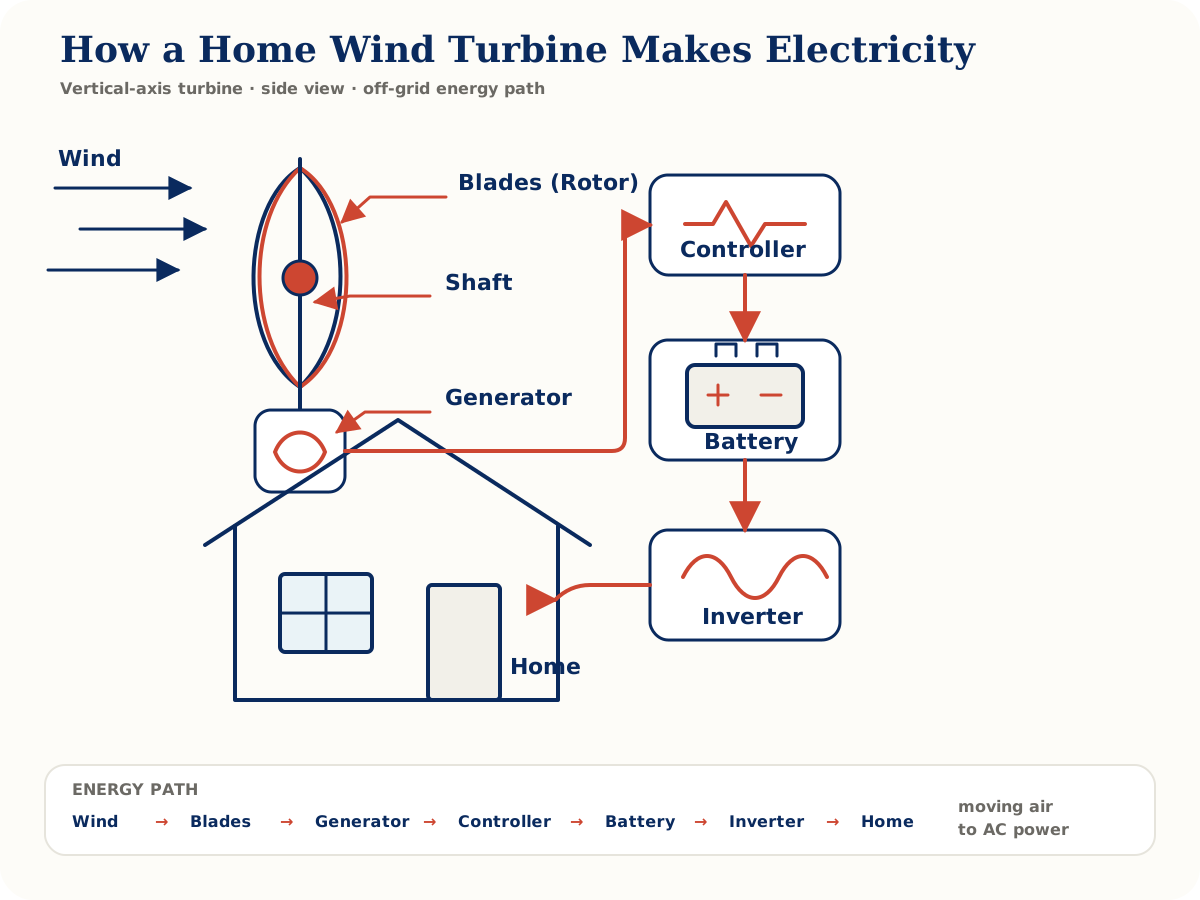
The Wind Turbine Diagram — Labelled Parts
A wind turbine has five core parts, whether it's a small home unit or a large wind-farm machine:
- Blades (rotor) — catch the wind and convert its force into rotational motion
- Shaft — connects the spinning rotor to the generator
- Generator — converts rotational motion into electrical current
- Controller — regulates the variable output from the generator into a stable charging current
- Battery — stores the electricity for use when needed
Step by Step: How a Wind Turbine Generates Electricity
Step 1 — Wind strikes the blades. The shape of the blades is designed so wind pressure creates lift and drag, causing the blade assembly to rotate.
Step 2 — The rotor spins the generator. The rotating blades turn a central shaft connected directly to a generator.
Step 3 — The generator produces electrical current. Inside the generator, magnets and coils of wire move relative to each other. This motion induces an electrical current — the same basic principle used in almost all electricity generation, from massive power plants to small home turbines.
Step 4 — The controller regulates the output. Wind speed constantly changes, so the raw output from the generator varies. A controller (in Solario's turbines, a Super MPPT Voltage Booster Controller) regulates this variable current into something a battery can safely accept.
Step 5 — The battery stores the energy. Electricity is stored in a battery bank rather than used instantly, which is what allows a home wind turbine to supply power even during calm periods.
Step 6 — The inverter powers the home. The existing household inverter converts the stored DC battery power into the AC power that runs lights, fans and appliances.
Why Wind Turbines Need Wind to Start Moving at All
Wind turbines don't start generating the instant any wind blows. Two thresholds matter:
- Start-up wind speed — the minimum wind needed for the rotor to begin turning at all
- Cut-in wind speed — the minimum wind needed for the turbine to generate usable electricity
These are often confused. A turbine can be visibly spinning (past start-up) while producing negligible power (below cut-in). This is a genuine engineering distinction, not a marketing detail — see the full power curve data on Solario's home turbine guide for real measured figures at each wind speed.
Vertical vs Horizontal Wind Turbines — How the Mechanism Differs
The basic principle (wind to rotation to generator to electricity) is the same for both designs, but the blade orientation differs:
Horizontal axis (HAWT) — the traditional propeller design, with blades that rotate around a horizontal axis facing into the wind. Requires the turbine to reorient as wind direction changes.
Vertical axis (VAWT) — blades rotate around a vertical axis, capturing wind from any direction without needing to reorient. This is why VAWTs suit rooftops with shifting, turbulent wind.
See the full comparison guide for more detail.
How Small Home Wind Turbines Differ From Large Wind-Farm Turbines
The mechanism is identical in principle — both convert wind into electricity through blades, a generator and a controller. The differences are scale and application:
| Home wind turbine | Utility-scale wind turbine | |
|---|---|---|
| Capacity | 1kW-3kW | 2-5+ MW |
| Mounting height | 10-20 metres | 100+ metres |
| Where installed | Rooftop or small mast at a single property | Wind farms feeding the electricity grid |
| Output goes to | A battery bank at that property | The national electricity grid |
A home wind turbine generator works on the same electromagnetic principle as a utility-scale one — it is simply built at a scale appropriate for powering a single home rather than a grid.
Frequently Asked Questions
How does a wind turbine generate electricity?
Wind spins the turbine's blades, which turn a shaft connected to a generator. Inside the generator, this rotation moves magnets and coils relative to each other, inducing an electrical current. A controller then regulates this current, typically to charge a battery.
What are the main parts of a wind turbine?
The core parts are the blades (rotor), the shaft, the generator, the controller, and, for a home system, the battery that stores the electricity and the inverter that converts it into usable power.
Does a wind turbine need a battery?
A home wind turbine typically charges a battery bank rather than powering appliances directly, because wind speed and therefore output constantly change. The battery stores energy so it can be used consistently, including when there is no wind.
What is the difference between how a home wind turbine and a wind-farm turbine work?
The underlying mechanism is the same. Blades convert wind into rotation, which a generator converts into electricity. The difference is scale: home turbines are 1kW-3kW and mounted at 10-20 metres for a single property, while wind-farm turbines are multi-megawatt machines mounted over 100 metres tall, feeding electricity into the grid.
Why doesn't a wind turbine generate electricity the moment it starts spinning?
A turbine's rotor can begin turning at a lower wind speed, called start-up speed, than the speed needed to generate meaningful, usable electricity, called cut-in speed. These are commonly confused but are technically distinct thresholds.