Axial Flux vs Radial Flux Motors: Complete 2026 Comparison Guide
Axial flux vs radial flux motors compared on power density, efficiency, cost, and applications. The 2026 guide to choosing the right motor topology.
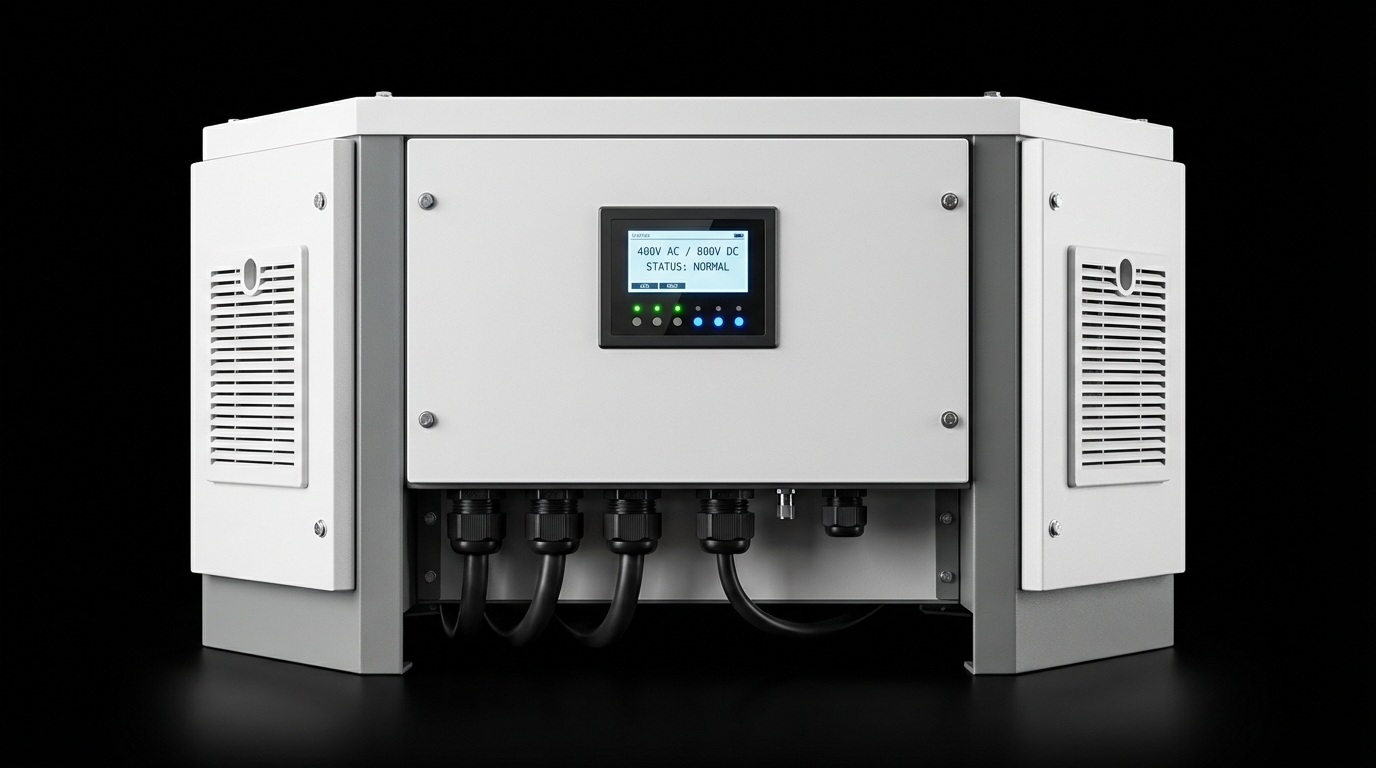
There are only two fundamentally different ways to design a high-performance electric motor: the radial flux topology, which has dominated industrial and automotive applications for over a century, and the axial flux topology, which is rapidly becoming the technology of choice for the most demanding modern applications including performance electric vehicles, electric aircraft, and high-efficiency wind turbines.
The choice between these two motor architectures is not a minor engineering detail. It determines how much torque a motor can produce per kilogram of weight, how efficiently it converts electricity to motion, how compactly it can be packaged, and ultimately whether the product it powers feels like a generation ahead or a generation behind. This guide explains the technical and practical differences between axial flux and radial flux motors, where each excels, and why the industry trajectory is shifting decisively toward axial flux in the applications that matter most.
The Core Geometric Difference
The names of these two motor topologies describe exactly what makes them different. The "flux" refers to the magnetic field lines that flow between the rotor (the rotating part) and the stator (the stationary part). Whether the motor is called axial or radial depends on the direction in which these field lines flow.
In a radial flux motor, the magnetic flux flows outward from the centre of the rotor toward the outer cylindrical wall of the motor — that is, perpendicular to the axis of rotation. Imagine looking at a slice of bread loaf from the end: the magnetic field lines fan out from the centre like spokes on a wheel. The rotor is a cylindrical drum mounted on the shaft, and the stator is a hollow cylindrical sleeve surrounding it. This is the classic motor shape, sausage-like and tubular, and it's what powers nearly every electric appliance, industrial pump, conventional electric car, and ceiling fan in the world.
In an axial flux motor, the magnetic flux flows parallel to the axis of rotation — from one flat face of the rotor disc to the other, along the direction of the shaft. The rotor is shaped like a thin disc or pancake, with magnets embedded on one or both flat faces. The stator sits as a corresponding flat disc facing the rotor, separated by a small air gap. Looking at the motor from the side, it resembles a stack of coins rather than a cylinder.
This geometric difference might sound like a minor cosmetic variation, but it cascades into nearly every aspect of motor performance.
Power Density and Torque Density: The Headline Numbers
Power density and torque density are the two metrics where axial flux motors most dramatically outperform their radial flux counterparts.
Power density measures how many kilowatts a motor can produce per kilogram of its own weight. A best-in-class mass-produced radial flux motor used in modern electric vehicles — say, the units found in current Tesla, BYD, or Hyundai EVs — operates in the range of 5 to 8 kilowatts per kilogram at peak output. This is already an impressive number that would have been considered science fiction in 2010.
Axial flux motors routinely deliver 15 to 25 kilowatts per kilogram in production applications, and the experimental ceiling has now been pushed to 59 kilowatts per kilogram by YASA's October 2025 record-setting motor that produces 750 kW peak power while weighing just 12.7 kilograms. No radial flux motor design has come close to matching this density, and the underlying physics suggests no future radial flux design will.
Torque density measures how much rotational force a motor can apply per kilogram. The gap here is even more dramatic. Axial flux motors deliver three to four times the torque density of radial flux equivalents. This is the single most important reason performance EV manufacturers — Ferrari, Koenigsegg, Lotus, McLaren — have switched to axial flux for their high-performance front and rear axle motors. Instant, brutal acceleration requires high torque available immediately, and an axial flux motor delivers it without the size and weight penalties of an equivalent radial flux unit.
The reason axial flux wins on density comes down to magnetic geometry. In a radial flux motor, the air gap between rotor and stator forms a single cylindrical surface. The amount of torque the motor can produce is proportional to the area of this air gap and the strength of the magnetic field crossing it. In an axial flux motor — particularly in the double-sided configuration where the rotor is sandwiched between two stators — there are effectively two air gaps, both on flat faces with maximum surface area relative to motor volume. The motor produces useful torque on both faces simultaneously, doubling the work done per kilogram of material.
Efficiency: The Quiet Multiplier
Headline efficiency numbers between modern axial and radial flux motors don't seem dramatically different. A premium radial flux EV motor operates at 92 to 94 percent efficiency at its sweet spot. An axial flux motor typically hits 95 to 97 percent in the same operating range.
A two or three percentage point gap sounds trivial, but it isn't. Efficiency losses compound exponentially in applications where motors run continuously or near-continuously — industrial pumps, wind turbines, electric aircraft, and long-haul electric trucks. Over a 20-year operating life, an axial flux generator in a wind turbine can capture meaningfully more total energy from the same wind site than a radial flux generator of the same nameplate power, simply because it loses less to internal resistance and heat across the full operating range.
The efficiency gap widens further at the edges of the operating envelope. Radial flux motors typically peak at one specific RPM and load combination, then drop off at very low or very high speeds. Axial flux motors maintain near-peak efficiency across a much wider RPM range, which is critical for applications with variable load such as wind energy and electric vehicle driving cycles. (For a detailed look at how this efficiency curve translates into real-world wind energy output, see the axial flux wind turbines guide.)
Cooling: An Often-Overlooked Advantage
How a motor sheds heat determines how much continuous power it can sustain and how long it lives. This is one of the most underappreciated advantages of axial flux topology.
In a radial flux motor, the copper windings are buried inside the cylindrical stator, wrapped around steel laminations deep inside the motor housing. Heat generated by current flowing through the windings has to travel through the steel laminations, across an air gap, and through the housing before it can be removed by cooling. Even with advanced liquid cooling channels, there are inherent thermal bottlenecks built into the geometry.
In an axial flux motor, the copper windings sit on flat stator disc faces with substantial surface area exposed to coolant flow. Liquid cooling channels can run directly through the stator structure, in close proximity to the heat-generating windings. Some advanced axial flux designs even use direct-cooled stator concepts where coolant contacts the windings through specialised insulating layers, removing heat almost the instant it's produced.
The practical consequence is that axial flux motors can sustain peak power output for significantly longer durations before thermal limits force them to derate. For a Formula E race car or an electric supercar, this means more laps at full power. For an industrial application or a wind generator, it means higher continuous output ratings from the same physical motor size.
Where Radial Flux Still Wins (And It Does)
It's important to be honest about the trade-offs. Radial flux motors are not obsolete, and there are legitimate reasons they continue to dominate the majority of electric motor applications globally.
Cost. Mass-produced radial flux motors are built on manufacturing infrastructure that has been refined for over a century. The tooling exists in every industrial economy. Workers know how to make them. Supply chains for the materials and components are mature and competitive. The result is that a radial flux motor of given specifications typically costs 25 to 40 percent less to manufacture than an equivalent axial flux unit. For applications where weight and size are not critical — water pumps, conveyor belts, industrial fans, basic mass-market electric vehicles — the cost difference is decisive.
Manufacturing tolerance. Axial flux motors require extremely tight alignment between the rotor and stator discs, with air gaps typically under 1 millimetre. Any rotor warping under thermal expansion, any bearing wear that allows the rotor to drift axially, and the motor performance degrades rapidly — or in extreme cases, the rotor contacts the stator and destroys both. Radial flux motors are far more forgiving in this respect; their cylindrical geometry naturally maintains the rotor-stator air gap regardless of axial movement or modest thermal expansion.
Maturity of supplier ecosystem. Need a replacement bearing, a controller, a specific magnet grade for a radial flux motor? Dozens of suppliers worldwide can fulfil the order in days. For axial flux motors, particularly the more advanced designs, the supplier base is much narrower and concentrated in Western Europe, Japan, and China.
Repair and serviceability. Radial flux motors can be opened, rewound, and repaired by competent motor repair workshops in nearly every major industrial city worldwide. Axial flux motors typically require return to the original manufacturer for any significant service, which can be slow and expensive — particularly for end users in markets where the manufacturer doesn't have local presence.
For these reasons, radial flux motors continue to make sense for the majority of industrial and basic transport applications. The axial flux advantage is concentrated specifically in applications where weight, size, peak efficiency, or peak power density justify the higher cost and the supply chain constraints.
Which Applications Demand Axial Flux?
The applications where axial flux has decisively won are increasingly easy to list because they share a common characteristic: the cost of weight, size, or inefficiency is higher than the cost premium of the motor itself.
Performance electric vehicles. Ferrari SF-90, Mercedes-AMG ONE, Koenigsegg Gemera, Lotus Evija, McLaren Artura. Every one uses axial flux motors for at least one axle. The Mercedes EQXX experimental drive demonstrated 1,202 kilometres on a single charge in part because its axial flux drivetrain converted nearly 95 percent of battery energy to wheel motion.
Electric aviation and eVTOLs. Joby Aviation, Lilium, Vertical Aerospace, Archer Aviation — every serious electric aircraft and "flying taxi" company uses axial flux motors. The weight penalty of a radial flux motor would make commercial electric flight economically impossible.
Military drones and unmanned systems. Long-endurance drones used by NATO forces and several other militaries have transitioned to axial flux propulsion for exactly the same reason: more flight time per kilogram of motor mass.
Industrial robotics. High-performance collaborative robots and industrial robotic arms benefit from the high torque density of axial flux motors at the joints, which reduces overall robot mass and improves payload capacity.
Small wind turbines. This is the application closest to the work that Solario Technologies does in India. Modern small wind turbines designed for residential and small-commercial use increasingly use axial flux generators because the low cogging torque allows the turbine to start spinning at much lower wind speeds — a critical advantage in regions like most of India where average wind speeds are well below the rated speeds quoted on imported turbine datasheets. (For more on this specific application, see the axial flux wind turbines deep-dive.)
The Trajectory: What Comes Next
The trajectory of motor technology is now clear to industry observers. Axial flux is the future for premium, performance, and weight-sensitive applications. Radial flux will remain dominant for cost-sensitive, mass-market applications for at least another decade, and possibly much longer for the lowest-cost segments where the existing supply chain economics are insurmountable.
The interesting question is what happens in the middle — mainstream consumer electric vehicles, mid-tier industrial equipment, residential wind turbines, mid-range electric appliances. As axial flux manufacturing costs continue to fall — driven by automation of stator winding, advances in additive manufacturing for rotor structures, and growing scale of premium EV production — the cost gap with radial flux will narrow. At some point in the late 2020s or early 2030s, axial flux will likely become competitive on cost even for mid-market applications, at which point the migration will accelerate dramatically.
For Indian engineers, manufacturers, and decision-makers, the practical takeaway is to start understanding axial flux technology now, before the migration hits the mass market. The companies and individuals who build expertise in this topology over the next three to five years will be well-positioned for the wave of opportunity that follows. (Read more on India's current state of axial flux motor manufacturing and the gap to be closed.)
Final Thoughts
The choice between axial flux and radial flux is not about which motor type is universally better. It's about which fits the application. For most of the world's industrial and basic transport needs, radial flux remains the correct, cost-effective choice. For applications where weight, size, efficiency, and power density are decisive, axial flux is now demonstrably superior and the industry has voted with its development budgets.
The most important thing for any buyer or specifier of electric motor technology in 2026 is to understand which side of that line their application falls on, and to ask the right questions of the suppliers they evaluate. Anyone selling you a high-performance electric vehicle, wind turbine, or aerospace propulsion system should be able to articulate exactly why their motor topology choice matches your application — and if they can't, that's the moment to find a different supplier.
Vertical and horizontal axis turbines from 1kW to 3kW — manufactured in India.
View All Turbines →About the Author
Harsh Chaudhary is the Founder and Director of Solario Technologies Pvt. Ltd., a renewable energy manufacturer specialising in vertical and horizontal axis wind turbines, hybrid solar-wind systems, and EV charging infrastructure. He produces technical education content on renewable energy across YouTube and Instagram, with 100K+ followers/subscribers across all social media platforms combined and 100 million+ total views across all platforms combined. Solario Technologies is the official India launch partner for the Cloud Arc Maris helical wind turbine by Archimedes. Reach the team at solariotechnology@gmail.com.